

Branch unions and multi-stem trees
Co-dominant leaders, included bark, and multiple trunks that move independently can split under load.
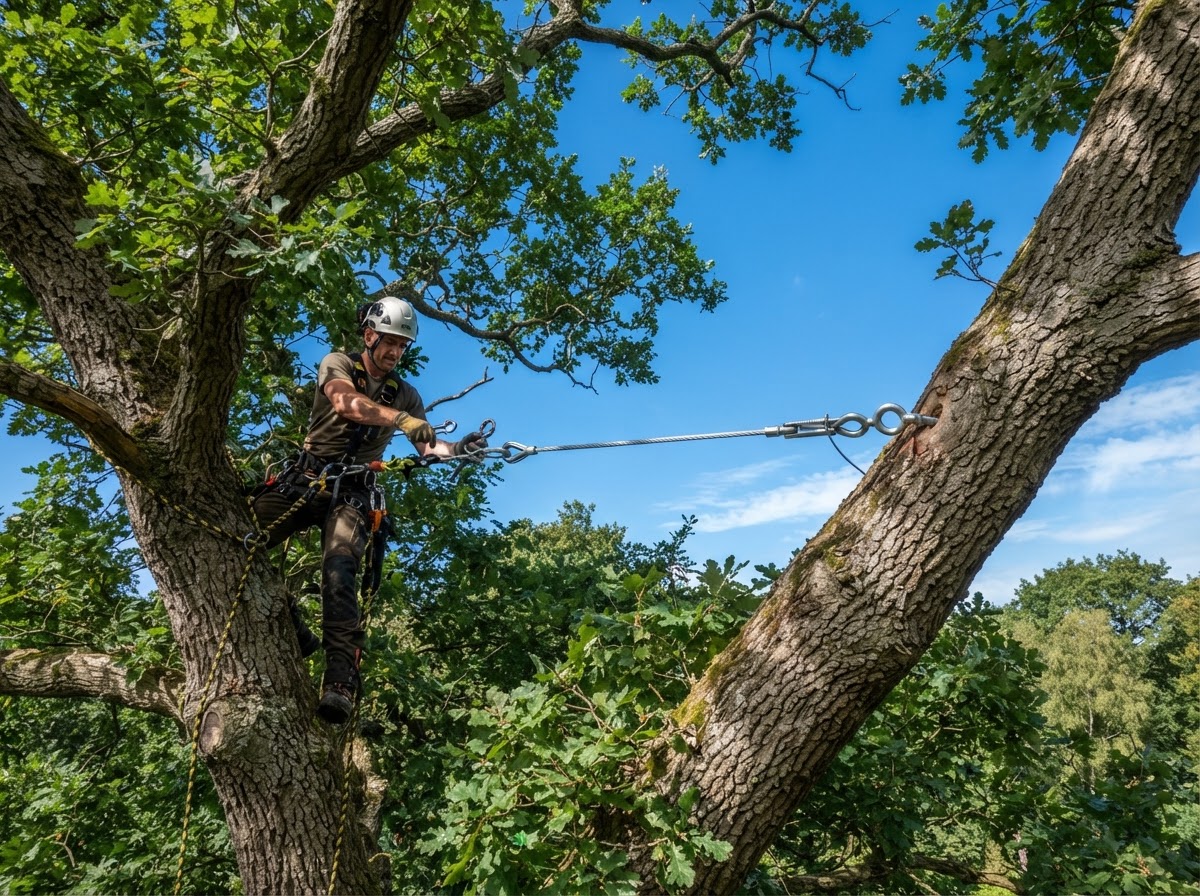
Explore whether structural support could help your tree, with an assessment of its condition and ongoing care needs.
Support is one option among several. Before recommending cabling or bracing, we assess the tree's structure, the loads it carries, and the conditions around it. The goal is a recommendation that fits the tree, not a cable for every concern.
Weak unions and co-dominant leaders are assessed for how they hold up under load.
Heavy limbs and long branches are evaluated for how they move and what they carry.
Health, decay, and what stands nearby all shape whether support is the right call.
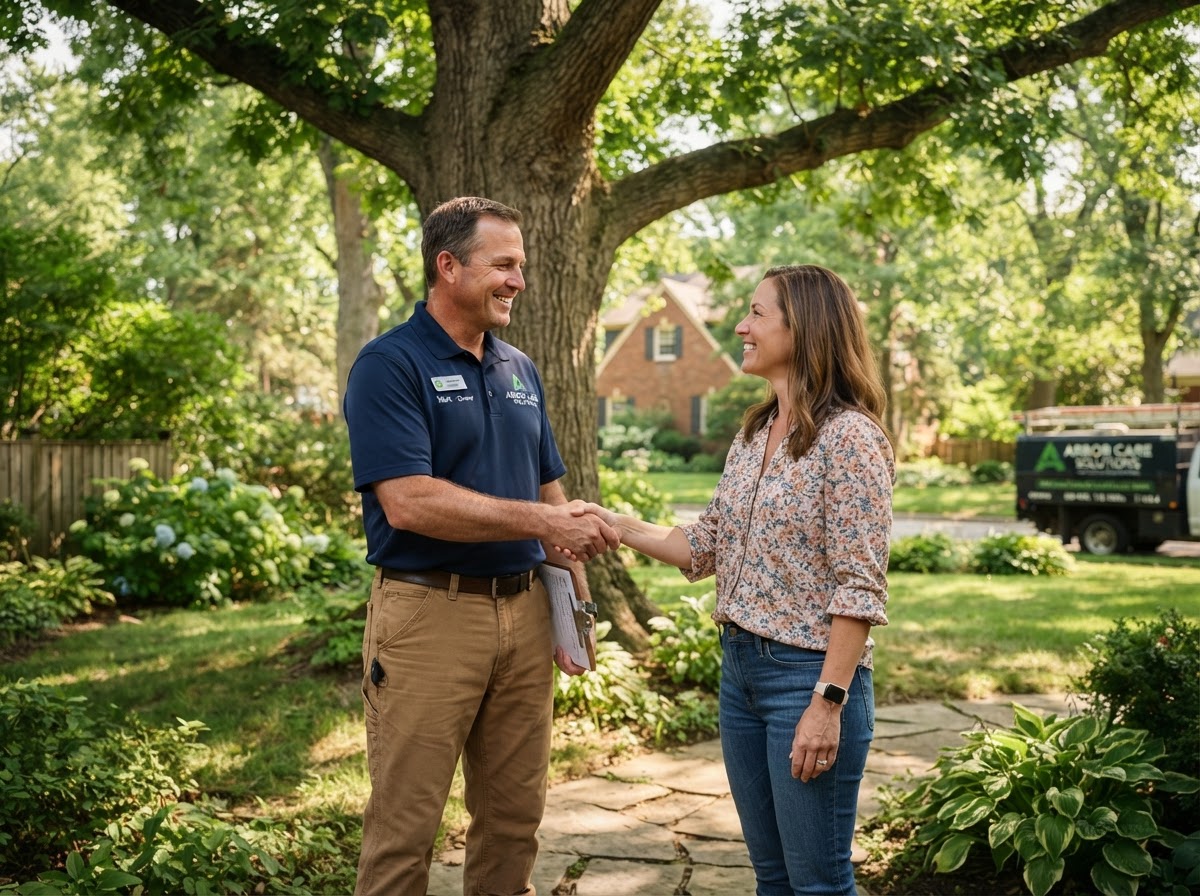
Cabling and bracing solve different problems. Which one fits, if either, depends on the tree and the union in front of us.
CablingHigh-strength cables are installed between limbs to limit how far a branch can swing in wind, reducing the force on a weak union.
BracingRods are placed through or across a weak union or split to hold the structure together and add rigidity where movement is the problem.
Suitability, technique, and follow-up all depend on the tree. The right approach is decided on site, not assumed from a photograph. These illustrations show the general idea, not a fixed installation plan.
These are the situations where a structural assessment can help decide whether support is worth considering. Not every concern can be corrected with a cable.
Co-dominant leaders, included bark, and multiple trunks that move independently can split under load.
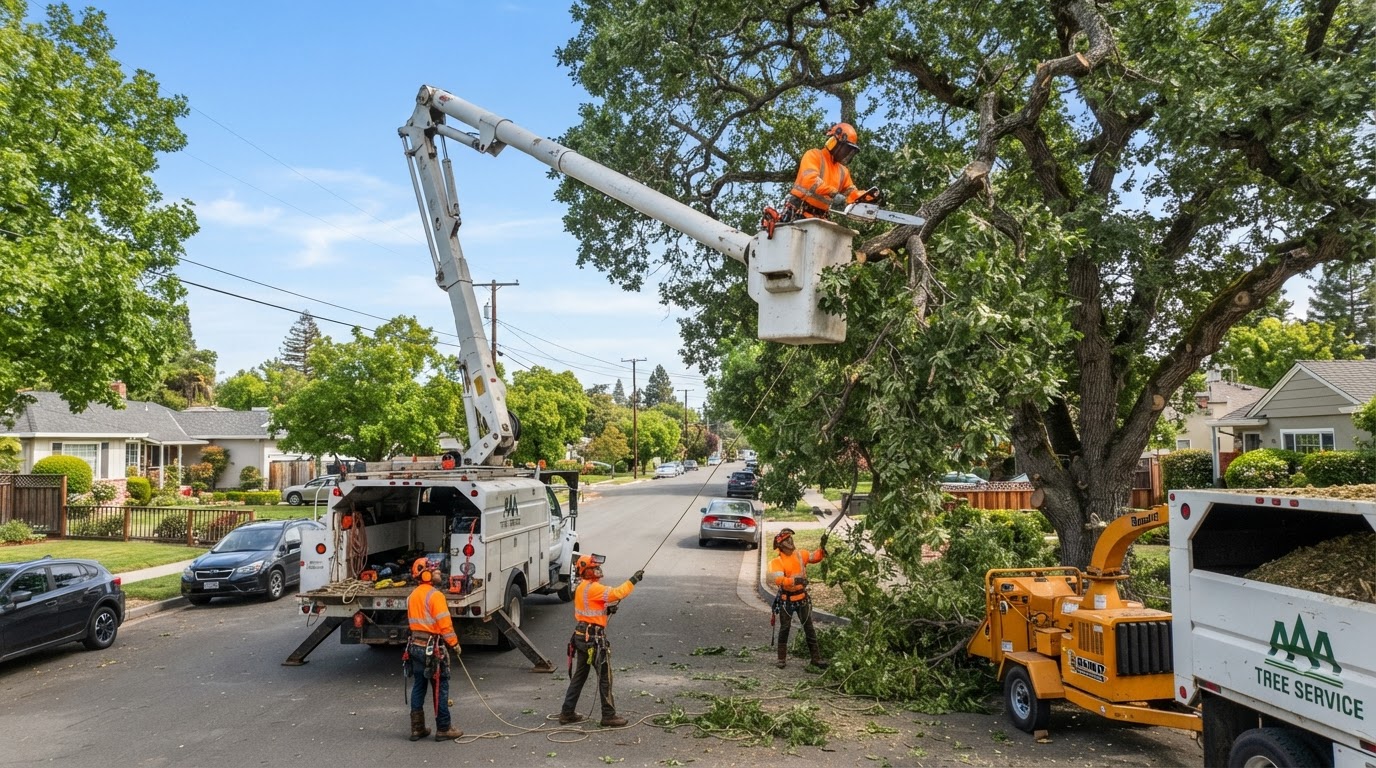
Long, heavy limbs with too much end-weight put steady stress on the unions that hold them.
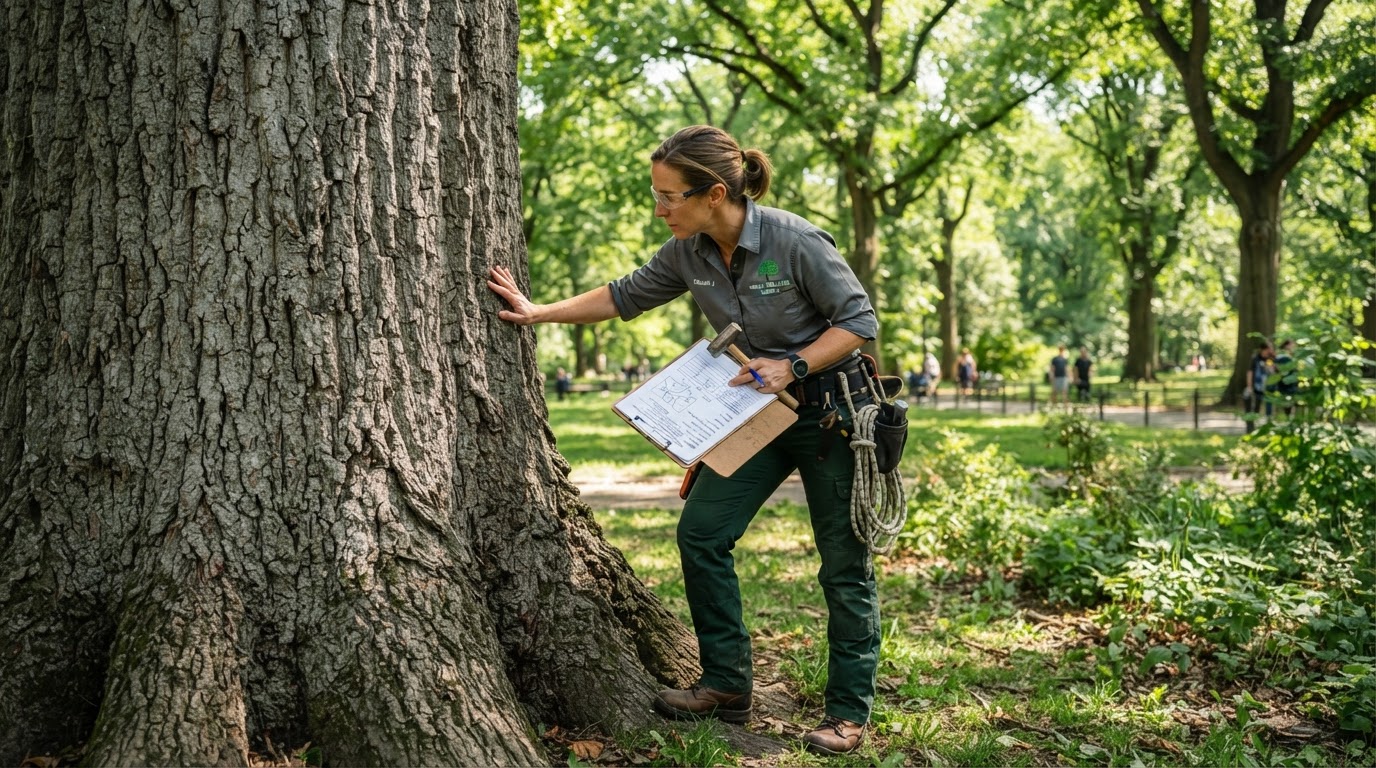
Specimen and legacy trees worth preserving for the long term often benefit from preventive support.
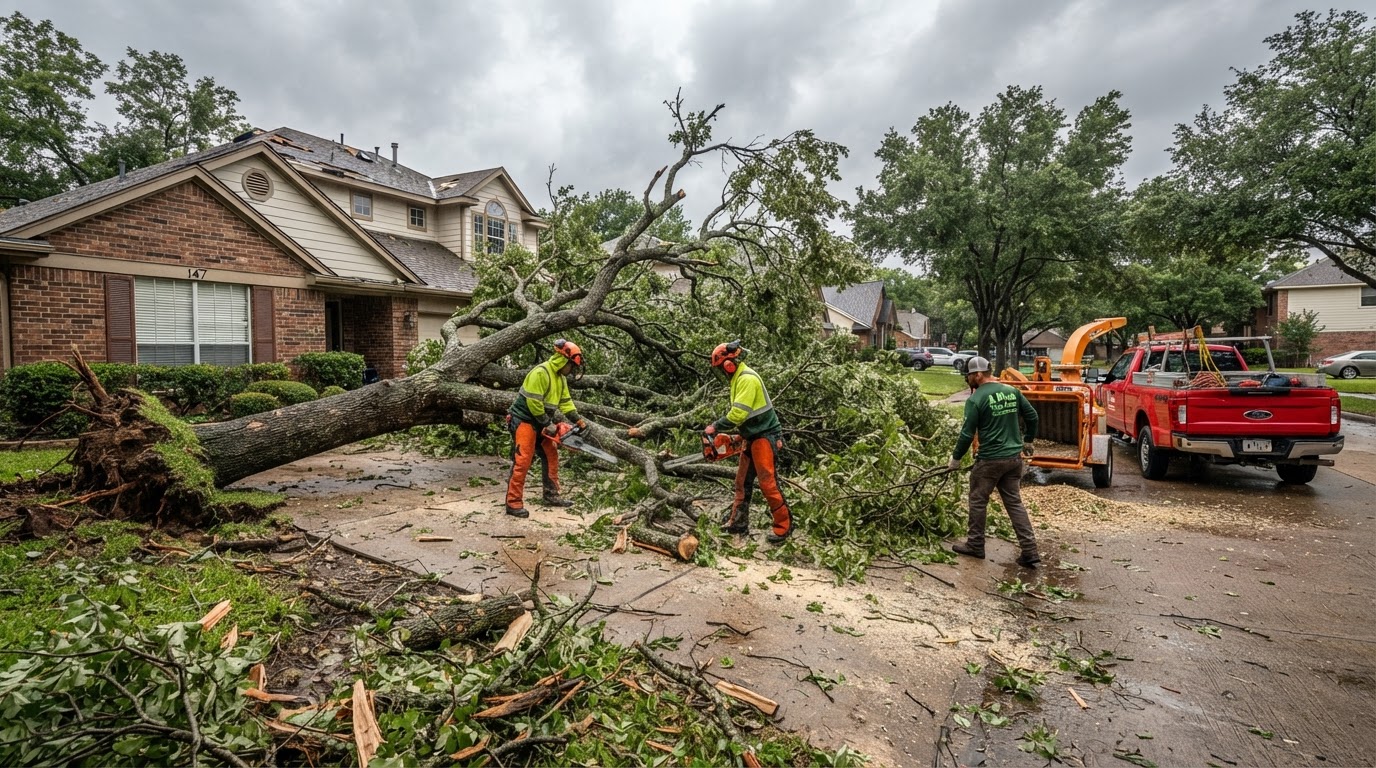
Trees that have taken storm damage, or stand where wind and ice load them hardest, may need reinforcement.
Support can extend the life of a structurally sound tree, but it cannot make a hazardous tree safe. We weigh the tree's condition, the risk it poses, and the realistic odds of long-term stability before recommending support, pruning, or removal.
Support is installed to professional arboricultural practice and inspected on a schedule so it keeps doing its job as the tree grows.
We look at the union, the load, the tree's health, and what stands nearby before recommending anything.
Cabling, bracing, pruning, or another approach, based on what the tree actually needs.
Hardware installed to professional arboricultural practice by our trained crew.
Support systems are inspected on a schedule and adjusted as the tree grows and conditions change.
Support is not a substitute for removal. If a tree is in serious decline or poses a real risk, cabling and bracing will not make it safe. We give you an honest assessment either way.
Worried about a split, a heavy limb, or a weak union? We are happy to take a look and give you an honest read on whether support is the right next step.
Call or email us and we will help you understand whether support is the right call and what to expect.